
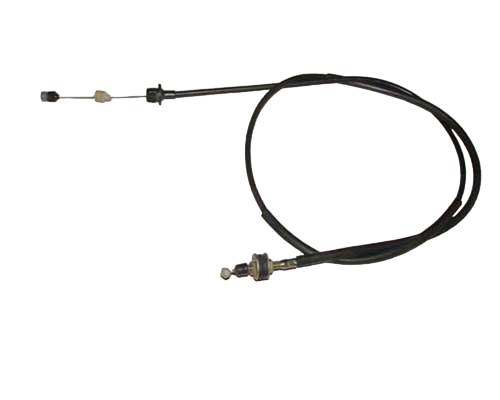
THROTTLE CABLE
Throttle cables are a must have in vehicles with internal combustion engines to control the speed and power of the engine. They are the link between the accelerator pedal or throttle lever in the driver’s compartment and the throttle body or carburetor in the engine. Chattarpati Automotive Systems, a well known name in the industry, manufactures and supplies throttle cables for smooth, reliable and efficient vehicle performance.
When you press the accelerator pedal, the throttle cable transmits this motion to the throttle body and regulates the air and fuel flow into the engine. This decides how much power the engine delivers and enhances the speed and performance of the vehicle. Knowing the importance of this, Chattarpati Automotive Systems makes throttle cables with precision engineering to work flawlessly in all types of vehicles.
Customizations and Quality Assurance
Our team of engineers and technicians work towards creating innovative and reliable solutions for various vehicle applications. We specialize in custom throttle cables to meet our customer’s specific needs. By working closely with our customers we ensure every cable fits and works perfectly. Our customization ability has made us a one stop shop for both standard and special vehicle requirements.
Quality is the foundation of our manufacturing process. At Chattarpati Automotive Systems we use high quality materials and advanced technology to produce throttle cables that are durable, flexible and wear and tear resistant. Our strict quality control measures ensure that every product meets the industry standards and performs consistently in harsh conditions. Along with our timely delivery we set a standard for ourselves in the market.
Why Choose Us?
Looking for throttle cables that enhance vehicle performance? Contact Chattarpati Automotive Systems. We have high quality materials, custom solutions and prompt customer service. Reach us today to know more or to order custom throttle cables for your needs.
Features
- Superior performance
- Smooth finish
- Great Strength
- Dimensional accuracy
- Longer functional life
- Friction free cable
- Best quality raw material used
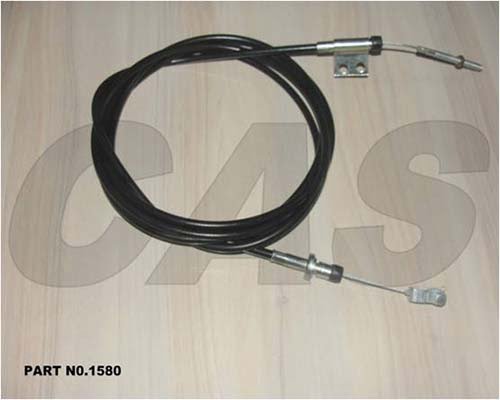
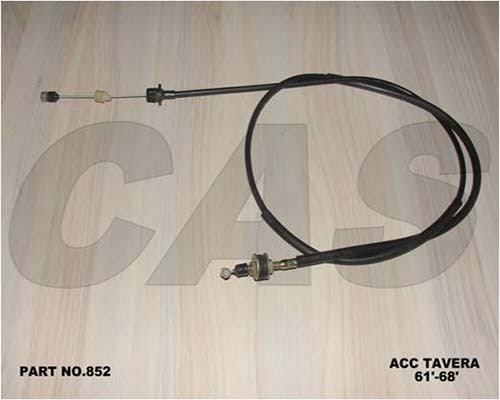
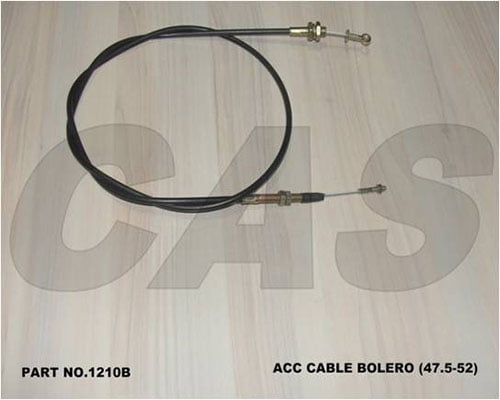
Some of Our Major Products

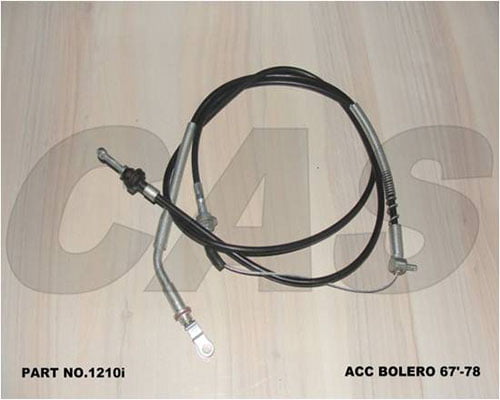


Frequently Asked Questions
Is a throttle cable the same as an accelerator cable?
In practice, yes — both connect the driver’s pedal to the engine’s throttle valve. “Throttle cable” is more common for small engines, generators, and industrial equipment. “Accelerator cable” is the usual term for cars and commercial vehicles. The build is the same. For traders, listing under both names helps with sales.
Why does a throttle feel sticky or slow to return?
- Dry or dirty cable — lost lubrication or grit inside the casing
- Kinked casing — sharp bends pinch the inner wire
- Rusted wire — moisture causes binding inside the casing
- Weak return spring — throttle valve does not snap shut
A sticking throttle is a serious safety risk. Stocking cables with plastic-lined casings reduces these complaints.
Can throttle cables be sourced for older vehicles?
Yes. When the original part number is discontinued, a manufacturer can copy the cable from a physical sample or drawings — matching length, fitting shape, and casing diameter. Common for older cars, tractors, stationary engines, and gensets. Wholesalers offering made-to-sample cables tap into a niche but steady market.
Single-pull vs dual-pull throttle cable?
Single-pull: One cable opens the throttle, a spring closes it. Used on most cars.
Dual-pull: Two cables — one opens, one closes. Used in fuel-injected engines where a spring alone is not reliable enough.
Dual-pull costs more but gives tighter control. Distributors should know which models need which type to avoid fitment issues.
How tight should a throttle cable be?
The cable should have 2–3 mm of free play at the throttle end. Too tight and the engine races at idle. Too loose and there is a dead zone before response. Most cables have a threaded adjuster for this. Wrong adjustment is the most common post-installation complaint — not the cable itself.
Does cable quality affect engine performance?
More than most people think. A cable with a smooth plastic-lined casing gives sharp throttle response with very little drag. A cheap bare-metal cable creates friction, dead spots, and uneven feel. For generators, industrial engines, and heavy equipment, cable quality directly affects performance and fuel use.