
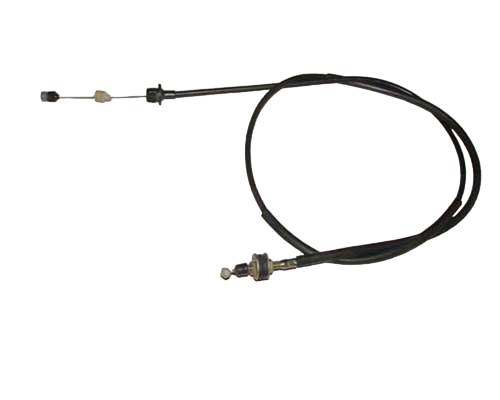
BONNET HOOD RELEASE CABLE
Bonnet Hood Release Cable or Hood Release Cable, is a crucial component utilized in automobiles to unlock and open the hood of a car. This contrivance consists of a metallic cable that links the hood release lever located inside the car to the clasp mechanism beneath the hood.
When the hood release lever is pulled from the inside of the car, the cable will tug on the clasp mechanism, which will subsequently release the hood, permitting it to open. The Bonnet Hood Release Cable is an indispensable component of a car’s safety system as it grants the driver or mechanic effortless entry to the engine compartment for maintenance, repairs, or fluid level checks.
Importance of the Bonnet Hood Release Cable
It’s essential to ensure that the Bonnet Hood Release Cable is in optimal condition and functions seamlessly as a faulty cable can hinder the hood from opening, resulting in a hazardous situation. Regular maintenance and inspection of the hood release cable is recommended to prevent such happenings..
Quality Assurance
As a prominent bonnet hood release cable manufacturer, we understand the significance of fabricating premium-grade products that are reliable, secure, and long-lasting. Our expert team has assisted us in establishing a reputation for providing exceptional bonnet hood release cables that meet as per the clients’ needs.
With over decades of expertise, our manufacturing staff team is able to delivering the utmost quality products and services to our patrons. We pride ourselves on our capability to engineer and manufacture hood release cables that cater to the specific requirements of our customers.
Our hood release cables are built from superior materials and are designed to comply with the highest
Applications of Bonnet Hood Release Cable
Our broad array of hood release cables is suitable for a diverse range of automotive applications. We offer cables that differ in length, diameter, and other features, enabling us to offer tailored solutions to our clients.
At Chattarpati Automotive Systems, we are committed to providing our clients with unmatched products and services. Our team of experts is always ready to offer technical support and advice to assist you in selecting the appropriate hood release cable for your specific requirements.
- Superior performance
- Smooth finish
- Great Strength
- Dimensional accuracy
- Longer functional life
- Friction free cable
- Best quality raw material used
Some of Our Major Products

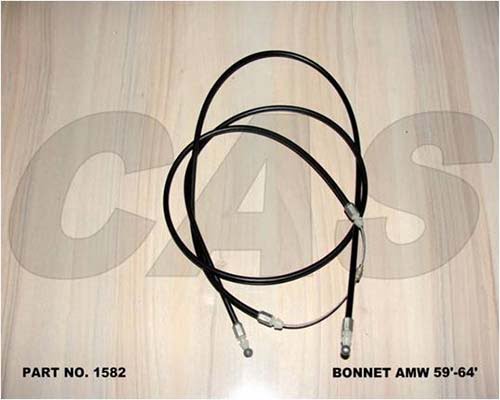
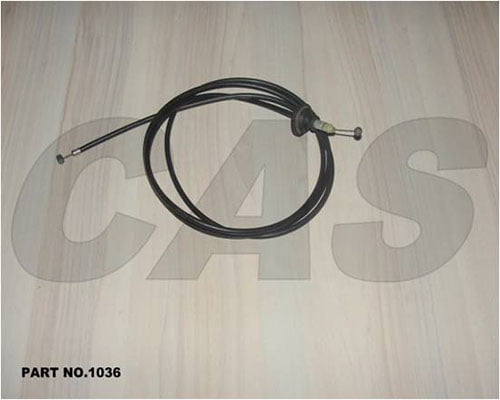

Frequently Asked Questions
What is a bonnet hood release cable?
A hood release cable connects the pull lever inside the cabin to the bonnet latch. When the driver pulls the lever, the cable releases the latch so the bonnet can be opened. Without it, the bonnet stays locked and you cannot access the engine bay.
How is it different from a bonnet cable?
They refer to the same part. “Hood release cable” is the descriptive term from service manuals. “Bonnet cable” is the shorter common name. For traders, listing under both names improves searchability.
What causes a hood release cable to fail?
- Corrosion — inner wire rusts from moisture
- Fraying — repeated pulling wears wire strands
- Seized latch — puts extra strain on the cable
- Broken handle — interior pull lever cracks
Most failures happen gradually. A cable needing extra force to pull is about to give out.
Can cables be made for discontinued models?
Yes. When OEM parts are no longer available, manufacturers replicate the cable from a sample or drawing. Common for older commercial vehicles and fleet models. Wholesalers offering these hard-to-find cables fill a real gap in the aftermarket.
What materials make a good hood release cable?
Galvanized or stainless steel inner wire with a plastic-lined casing. The liner keeps friction low for smooth pull-and-return action. PVC or nylon outer jacket protects against moisture. Cheap cables without proper lining corrode fast in Indian conditions.
Why is this a good product for bulk suppliers?
Every vehicle has one, and it cannot be skipped during repair. The replacement cycle is steady for commercial fleets and older vehicles. Low-cost but high-demand — a reliable inventory item for distributors.